Standardizing Retailer Onboarding Across RIL Verticals
Catering to a network of 120,000+ retailers, 87,653+ salespersons, and our in-house sales heads.

👩🏻💻 My Team
Lead (1) – Strategic guidance
UX Designer (Me) – Collaborated closely with PMs to shape the redesign and with engineers
to ensure feasibility and smooth
execution.
PMs (2) – Defined gaps, user stories,
and framework
Engineers (3) – 2 Frontend, 1 Backend
for implementation
📌 About
Redefining and standardizing the onboarding experience across Jio’s DMS verticals by creating a seamless user journey, streamlining task completion, and empowering retailers with self-onboarding.
⌛ Duration
8 Months of Research ,Designing, Testing & Development.
Background
Reliance Retail, a subsidiary of Reliance Industries Limited, is India’s largest retailersupply chain. Its a B2B e-commerce platform connecting small and medium-sized retailers with Reliance’s diverse verticals, including industries such as FMCG, fashion, electronics, pharma, HoReCa, and more.
Focus
The platform enables shop owners to purchase products in bulk directly from Reliance Retail at wholesale prices, which they can then sell offline in their own stores.
Features
Wide range of brands and products across categories
Wholesale pricing with credit facilities
Personalized service from sales experts
Bulk order fulfillment with reliable delivery to offline stores

FMCG
Fashion
Electronics
Pharma
HoReCa
Current Challenges
Onboarding across Reliance Retail’s multiple verticals was fragmented and inconsistent. Each business unit had its own process, which did not reflect a unified Reliance Retail ecosystem.
Business Gaps
High dependency on salespersons (FOS) → majority of retailers were onboarded through assisted onboarding instead of self-onboarding.
Cases of false or incomplete onboarding created compliance risks.
Design Gaps
Onboarding flows were not aligned with the Jio Design System (JDS), leading to inconsistent user experiences.
The digital process was complex and not retailer-friendly, preventing self-service adoption.
Total Retailers Onboarded
Across Reliance Retail’s DMS verticals, more than 120,000 retailers have been onboarded onto the platform.
Assisted Onboarding
A vast majority of retailers required hands-on support from salespersons during the onboarding process, highlighting low adoption of self-onboarding.
False or Inactive Retailers
Over one-third of the already onboarded retailers were either inactive or incorrectly onboarded, creating gaps in data accuracy and compliance.
🎯 Objective
Standardize retailer onboarding across Reliance Retail by delivering a seamless Jio Design System-aligned experience that drives self-onboarding, speeds up assisted onboarding, and ensures accuracy at scale.
Project Goals
Streamline Onboarding - Simplify the retailer onboarding journey to reduce complexity and prevent false onboardings.
Reduce Manual Intervention - Minimize dependency on salespersons by enabling a smooth self-onboarding experience for retailers.
JDS Compliance - Align the UI with the Jio Design System to ensure consistency and brand coherence across verticals.
Scalability & Accessibility - Build a scalable platform that supports current needs and adapts seamlessly to future business growth.
Benchmarking
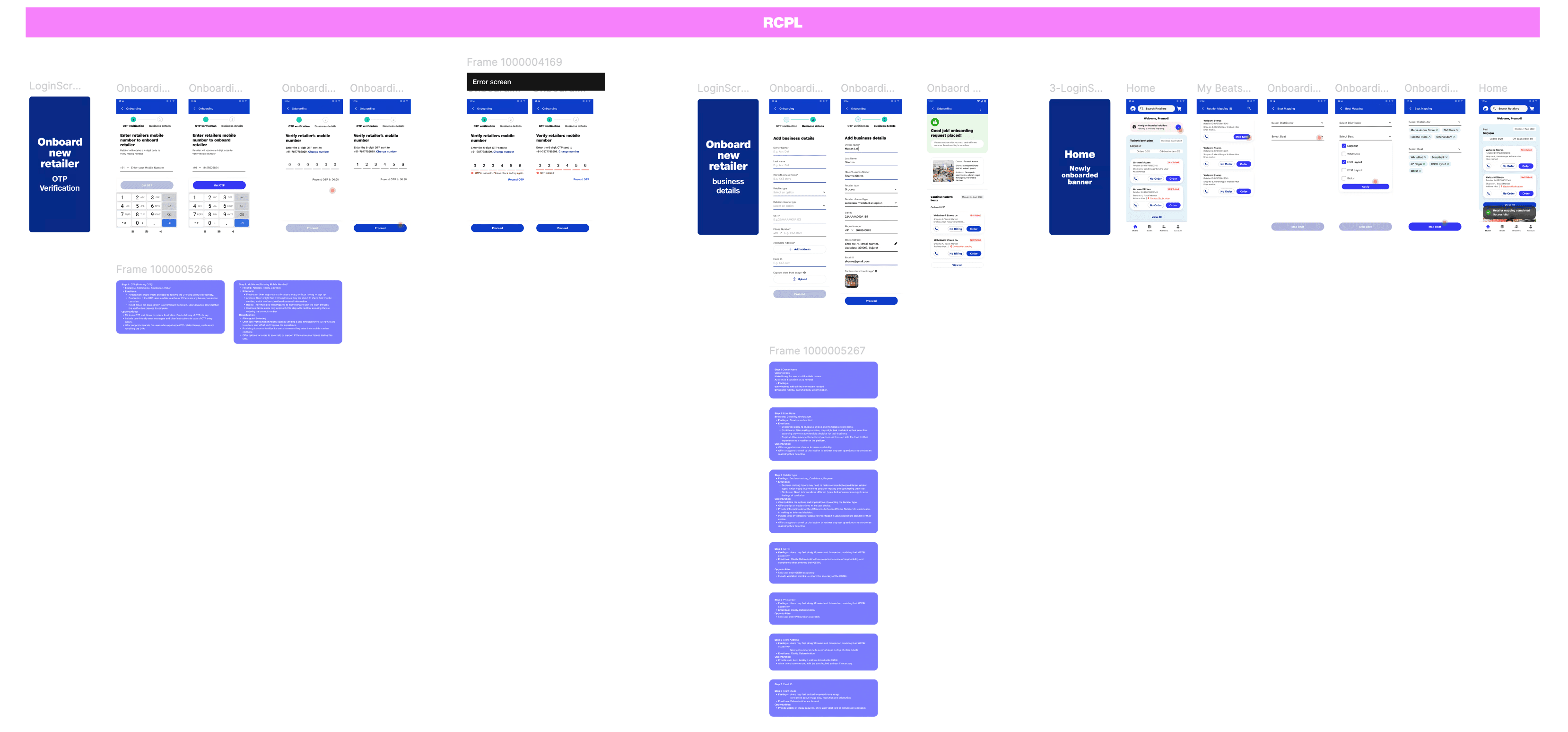
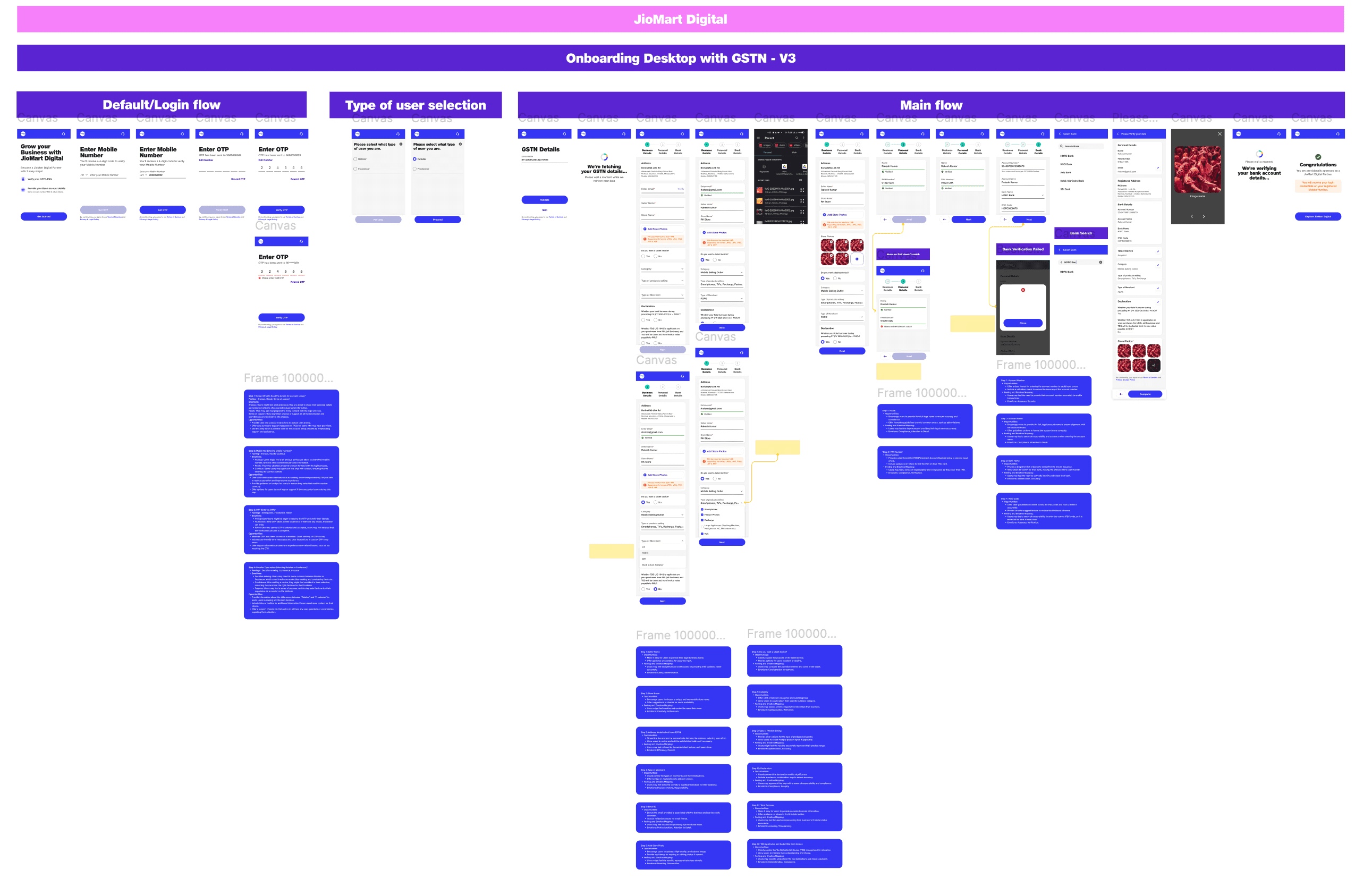
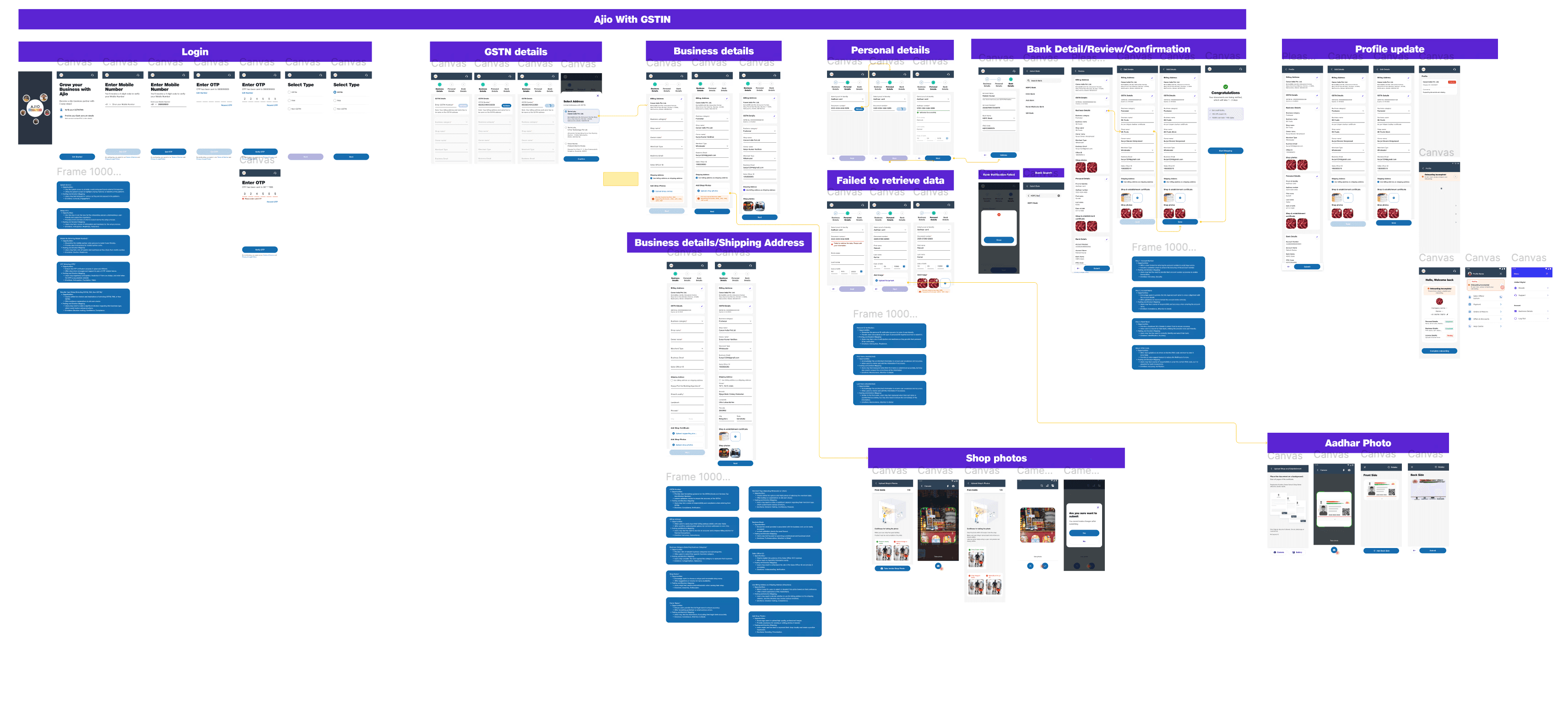
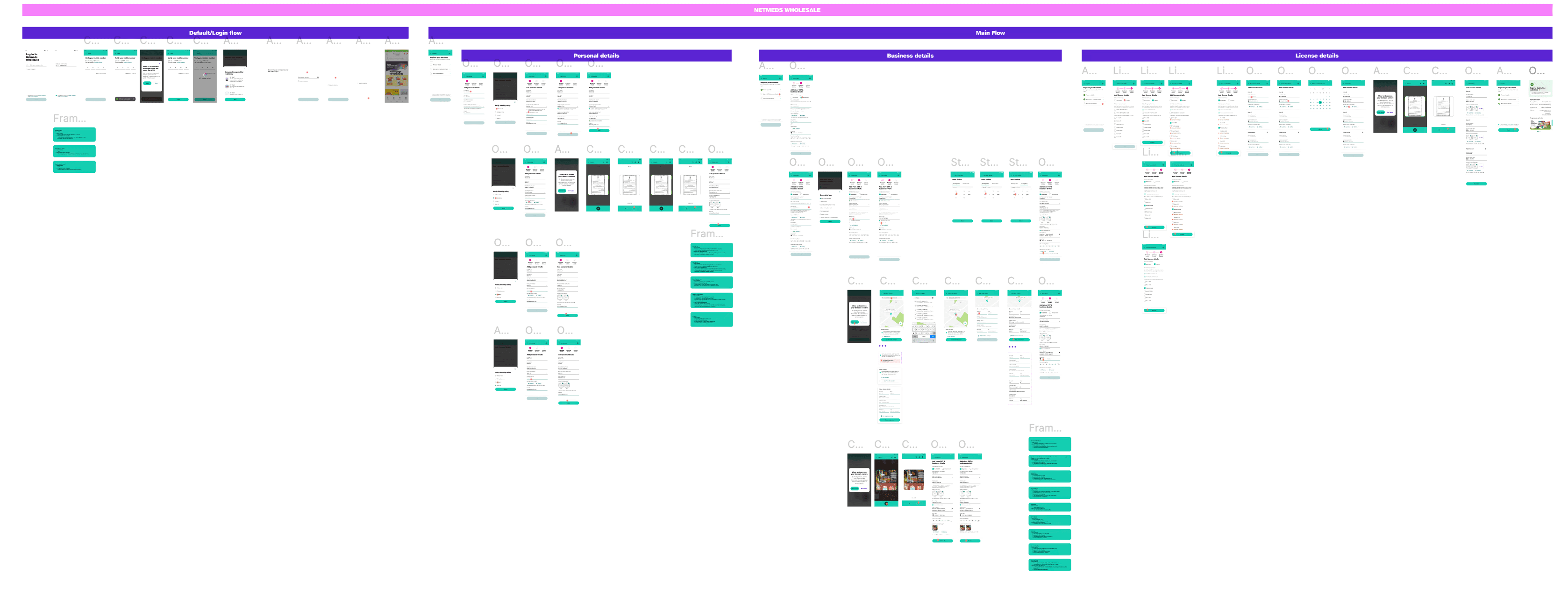
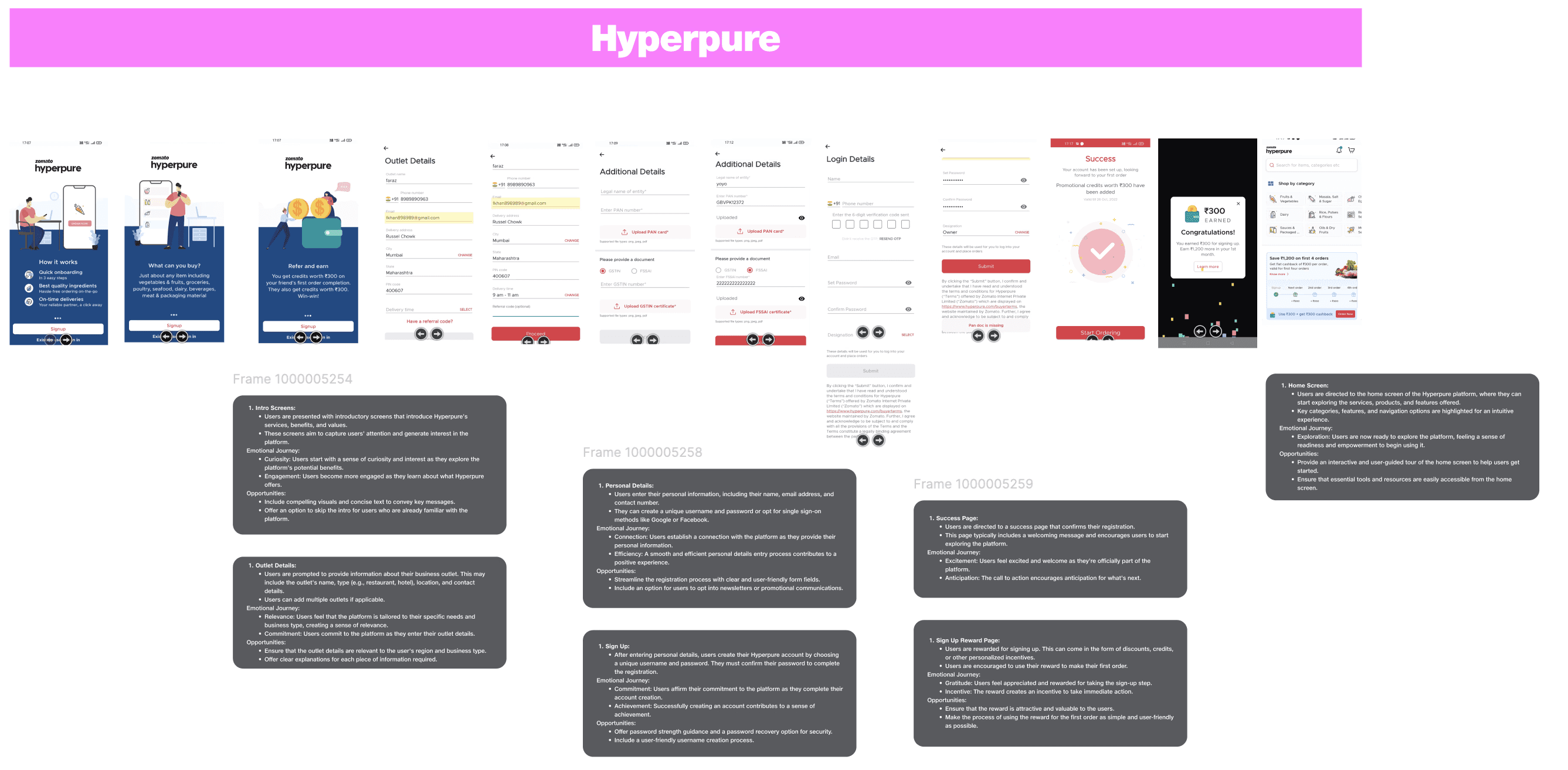
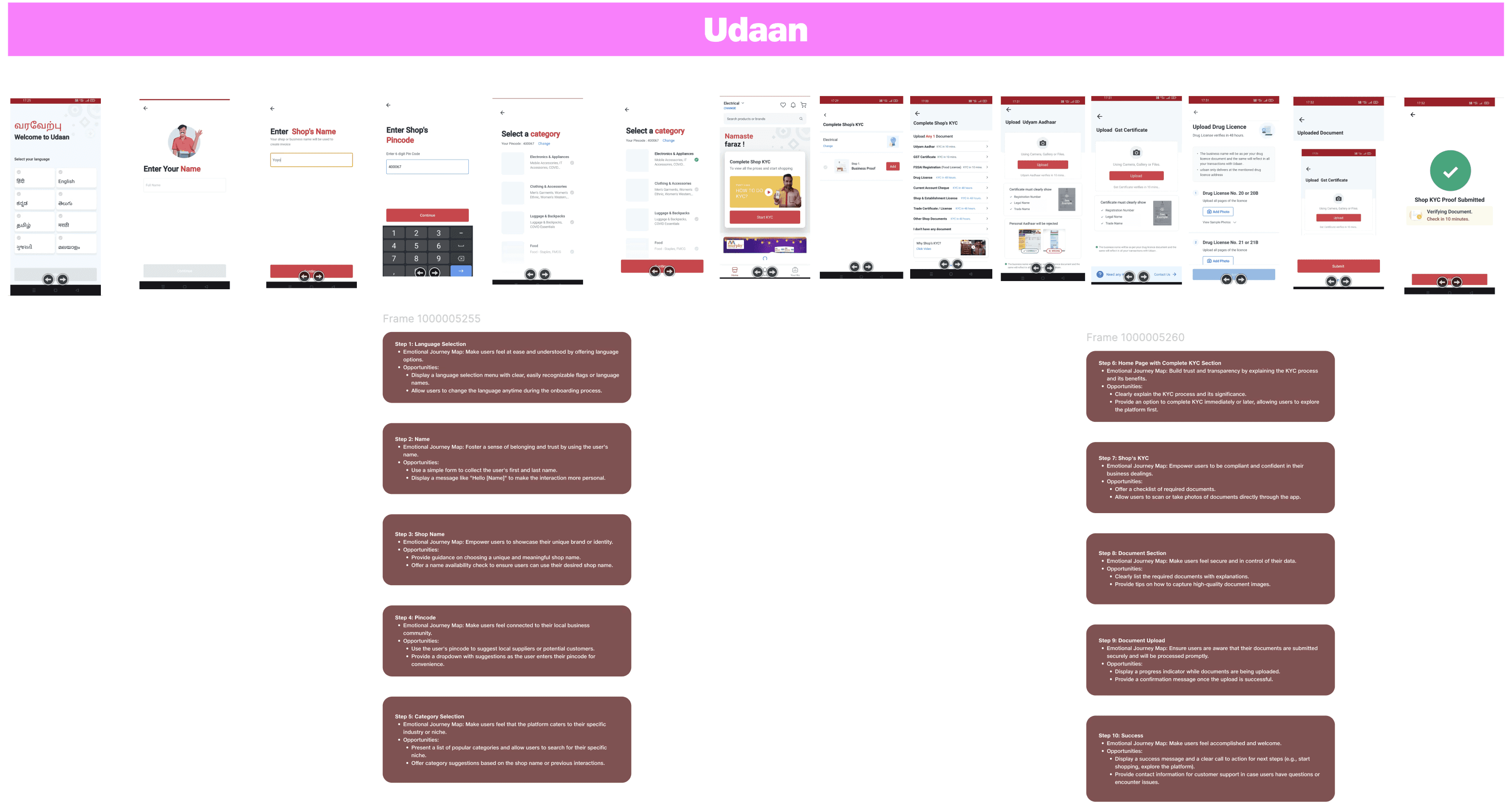
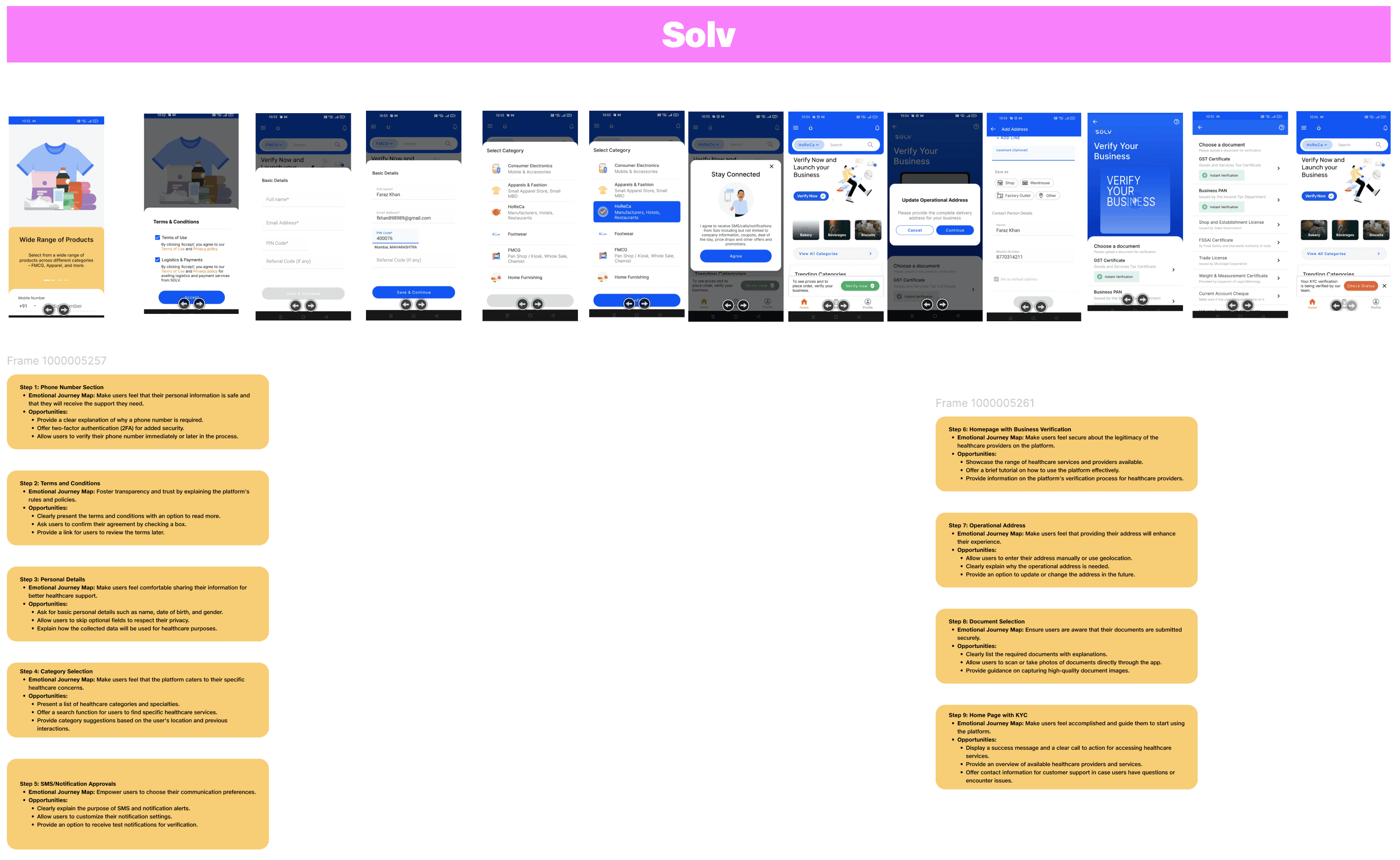
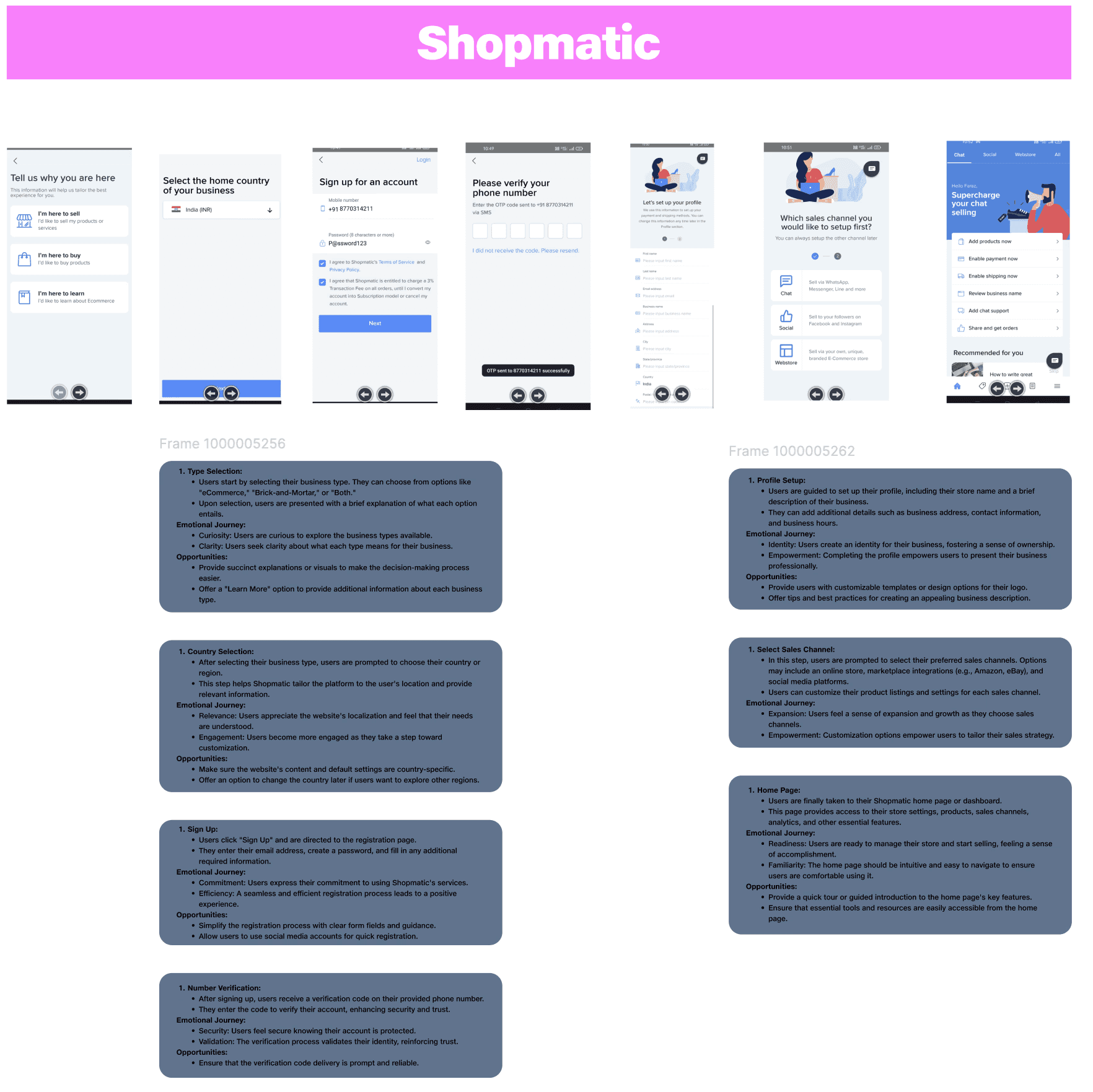
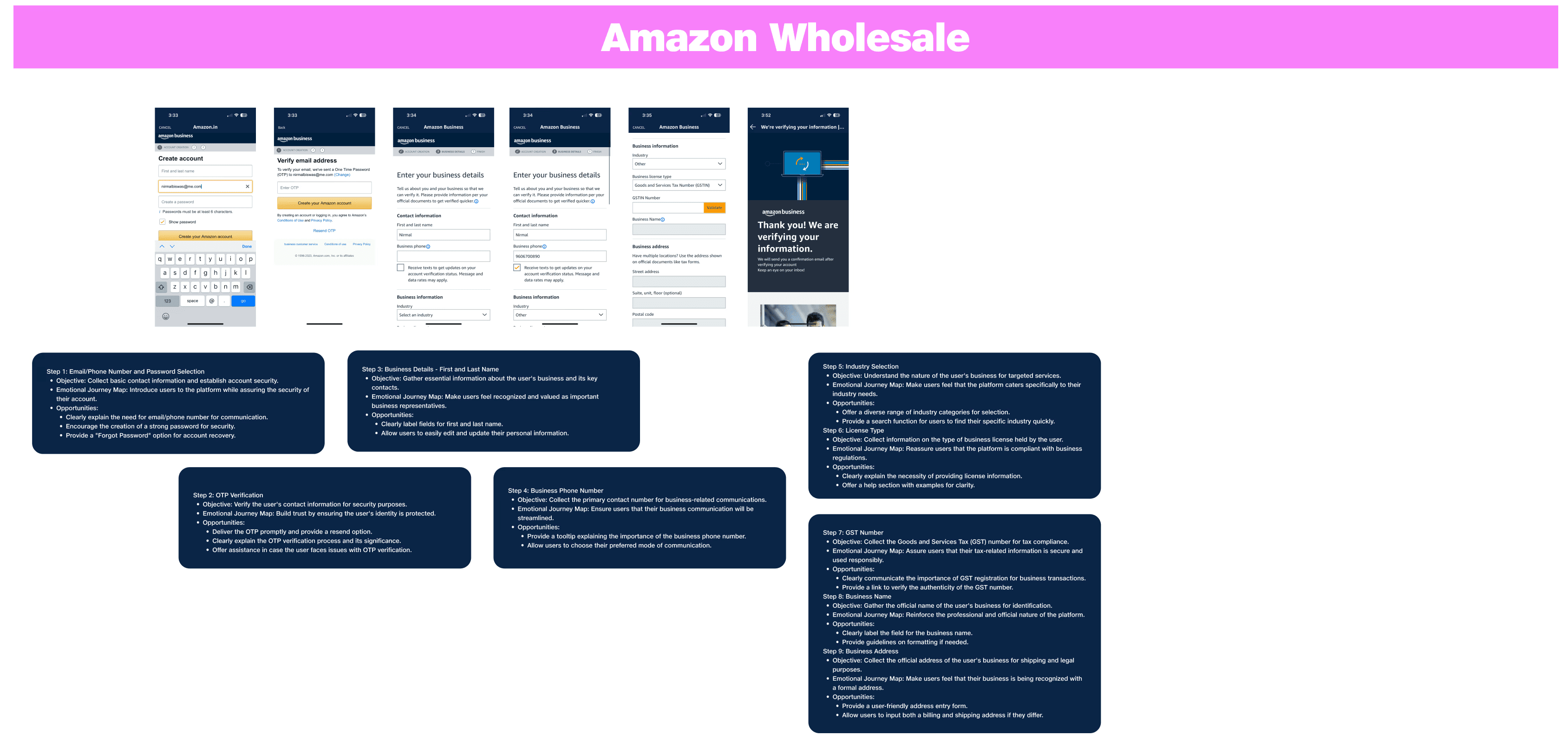
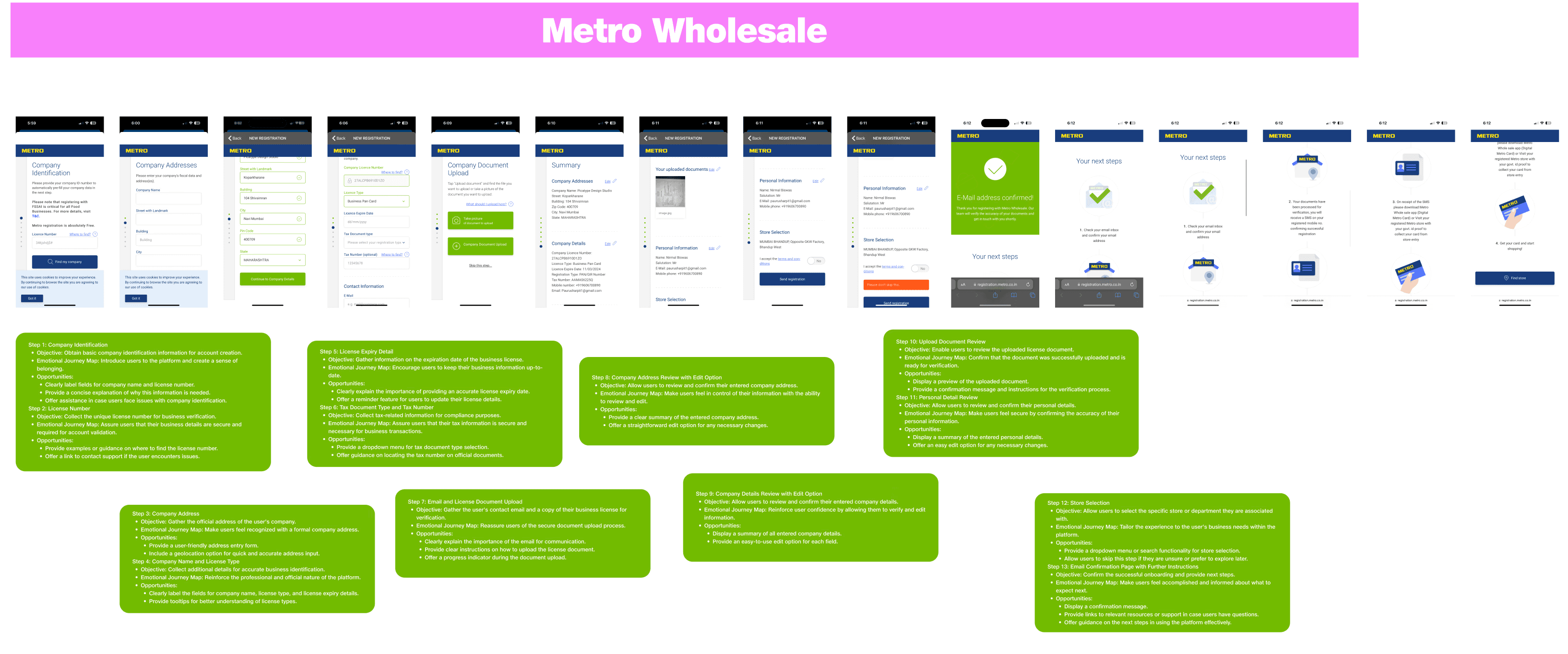

RCPL | JioMart Digital | Ajio | NetMeds | Metro | Flipkart | Amazon | Solv | Udaan | Shopmatic | Hyperpure
📌 Research Approach
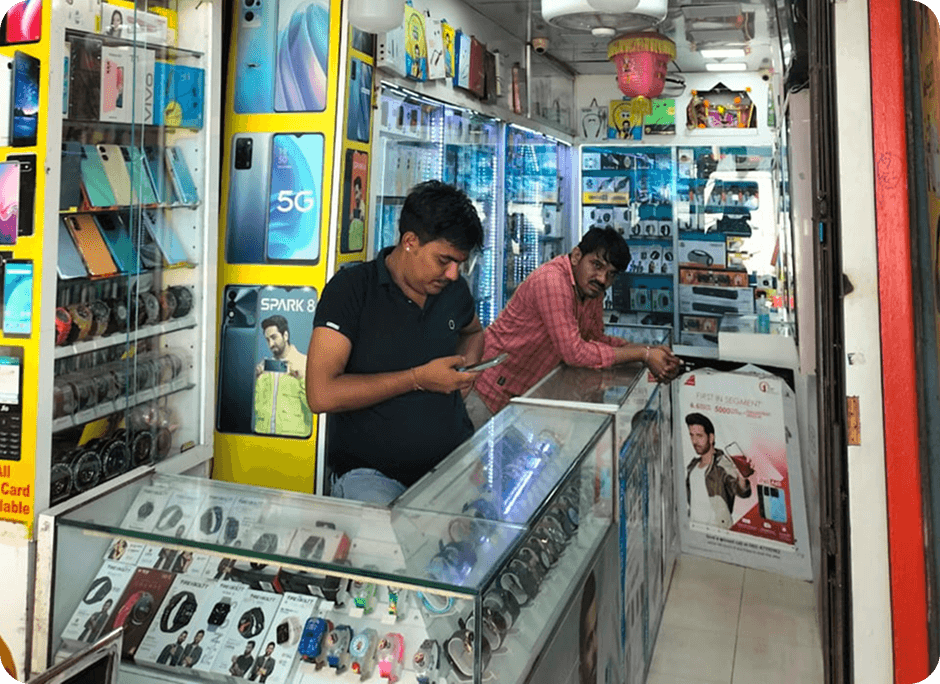
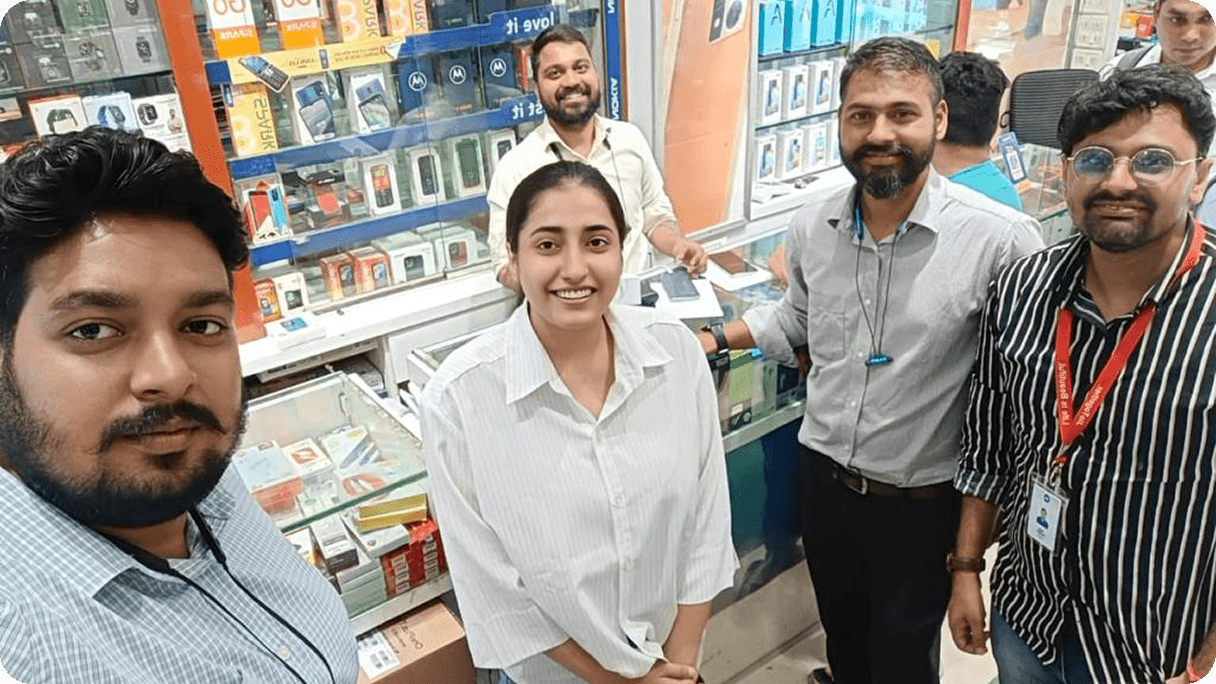
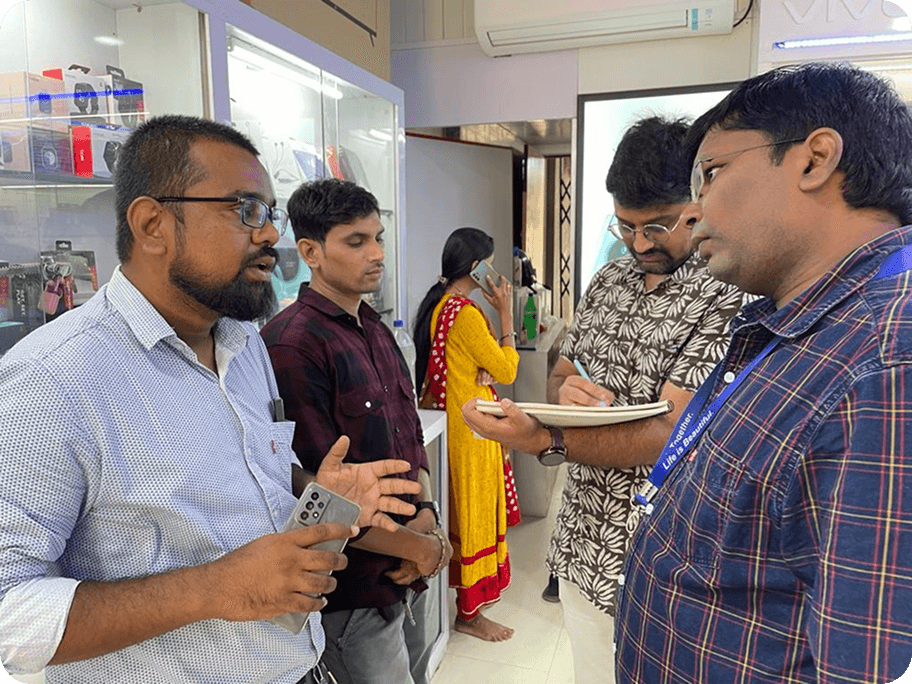
To map the current onboarding journey and uncover gaps, we conducted on-field research with both onboarded and non-onboarded retailers and our sales persons.
Research Objectives
Understand challenges in the existing onboarding process.
Identify friction points for both retailers and salespersons.
Explore reasons behind low adoption of self-onboarding.
Salespersons
Met with 4 FOS to learn about their workflow, challenges in assisting retailers, and manual dependencies.
Onboarded Retailers
Spoke with 10 shop owners already onboarded to capture their onboarding experience, pain points, and satisfaction levels.
Non-Onboarded Retailers
Engaged with 10 retailers who had not yet joined to understand their hesitations, barriers, and their concerns.

Takeaways
IA Creation
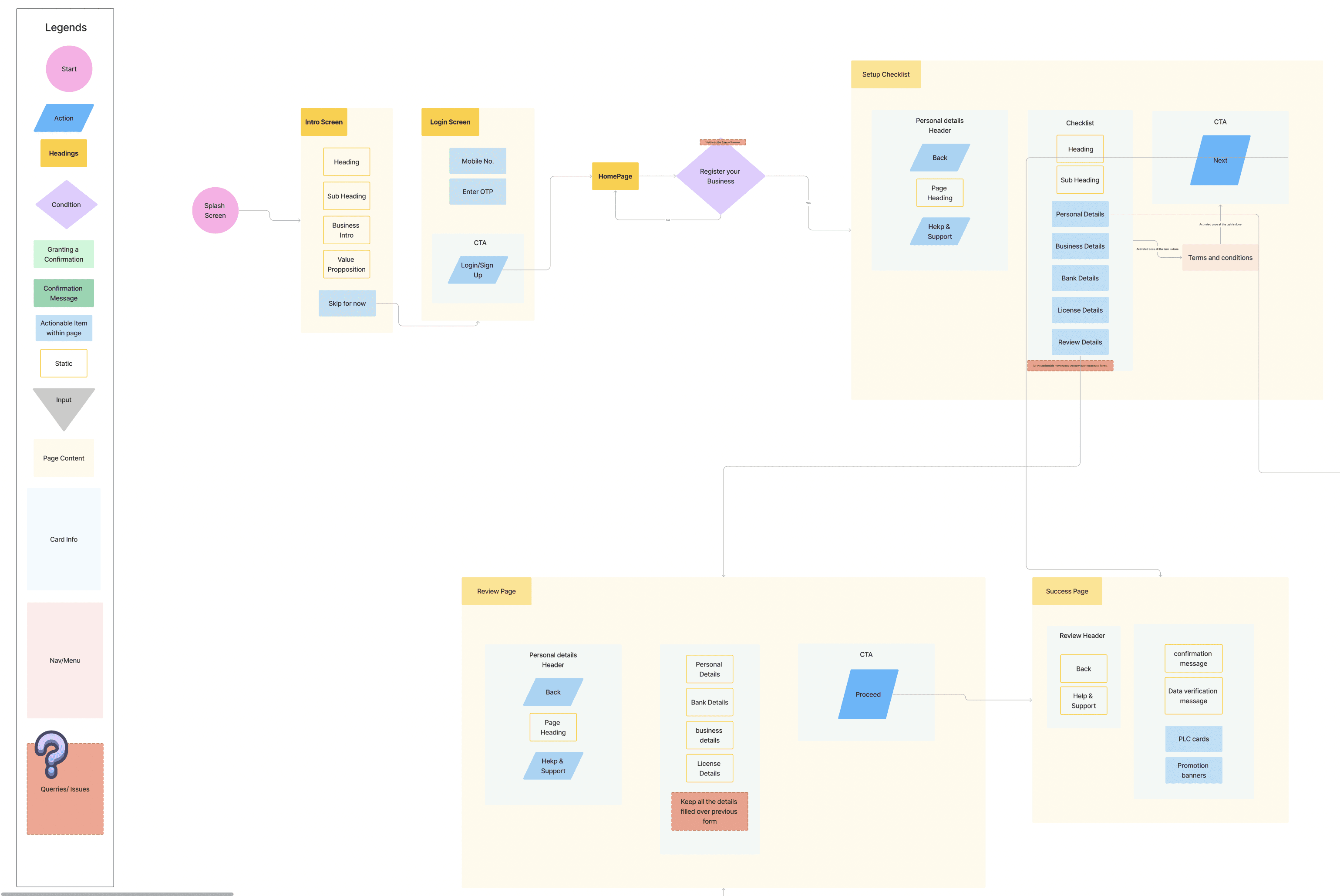
Based on the insights gathered from research & Benchmarking, we developed an Information Architecture to define the final design pattern for the project.
Final Designs
Following the wireframing stage, I translated the structure into fully realized UI designs, utilizing the Jio Design System for consistency and scalability.
Login /Registration
Upon login, users can select their preferred language and are then guided through an intro screen. After logging in, they land on the homepage where a banner prompts them to register, with options to select whether they are a GST or non-GST user.
Personal Details - Manual
Users are redirected to the personal details page, where they can see all the steps at the top. They have the option to fill the form manually or use DigiLocker for Aadhaar verification or other documents, which autofills their name and date of birth. Afterward, they can proceed to the business details flow.
Personal Details - Digilocker
Users can opt to autofill the form via DigiLocker by logging into their DigiLocker account. Upon returning to the application, they confirm their details, which are then automatically populated in the form.
Business Details
Users are prompted to add details about their store and verify their GST number. If they don't have a GST number, they can skip this step. Once the GST number is verified, some of the data is automatically populated.
Bank Details
The bank details form allows users to enter the account holder's name, account number, IFSC code, and bank name. For the IFSC code, users can search and select the required details to autofill the code.
Impact
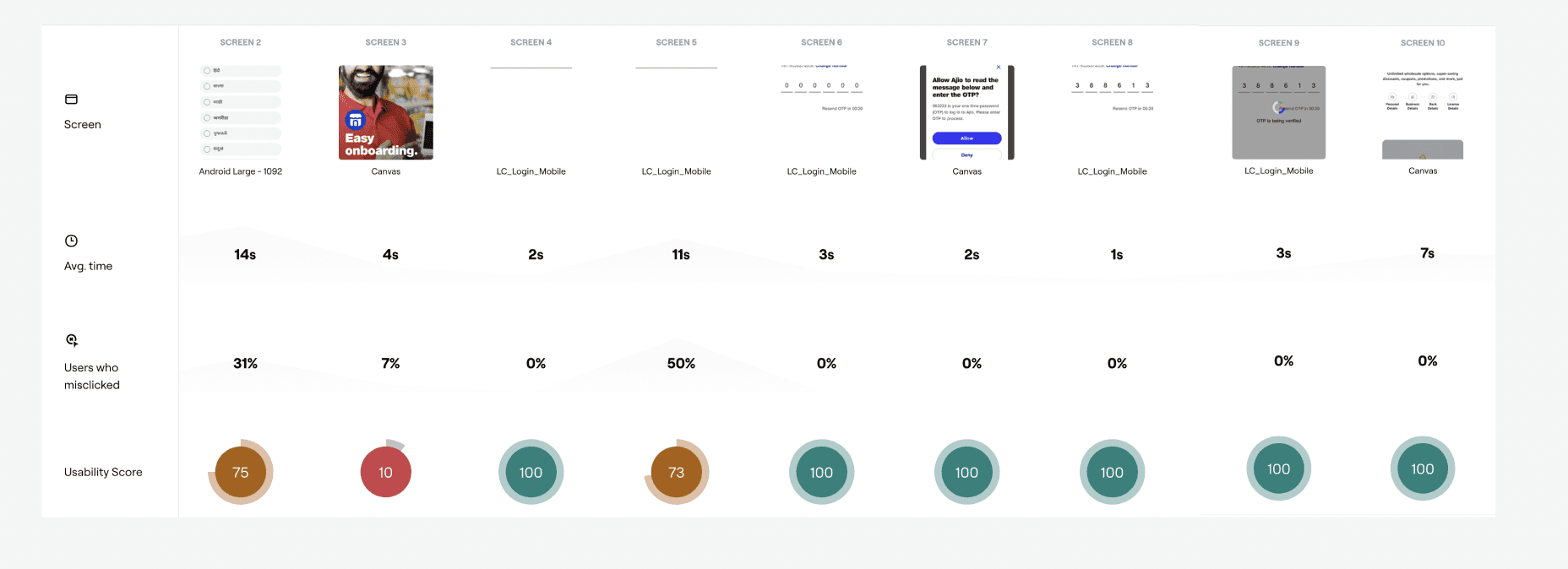
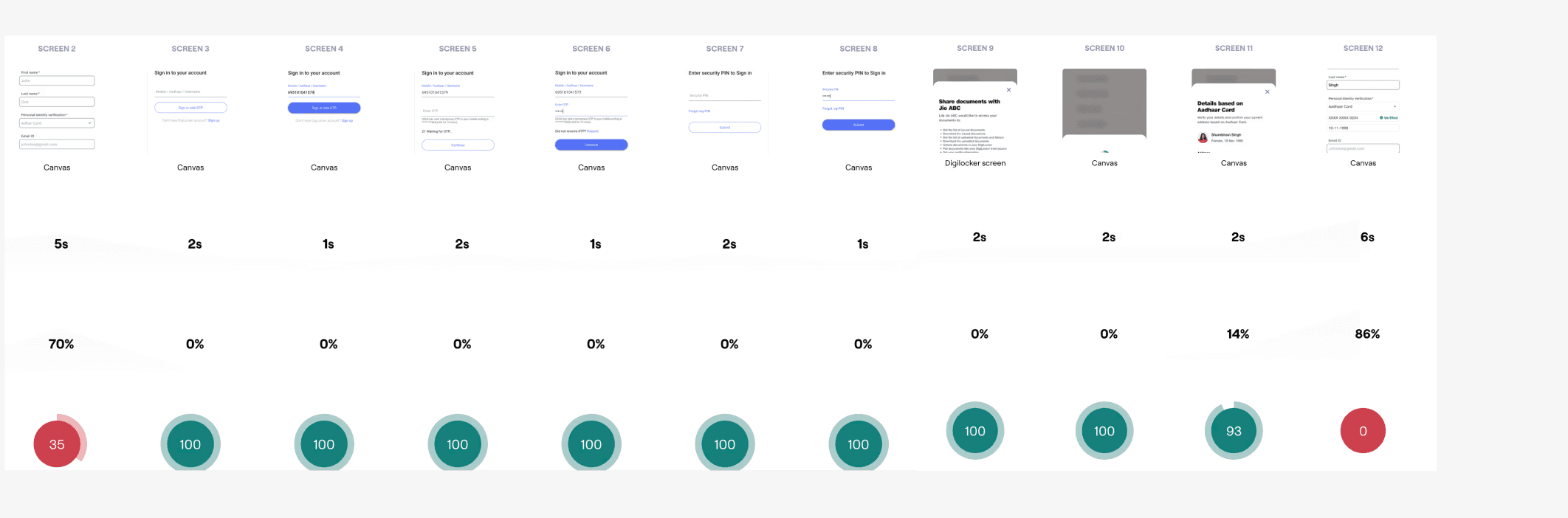
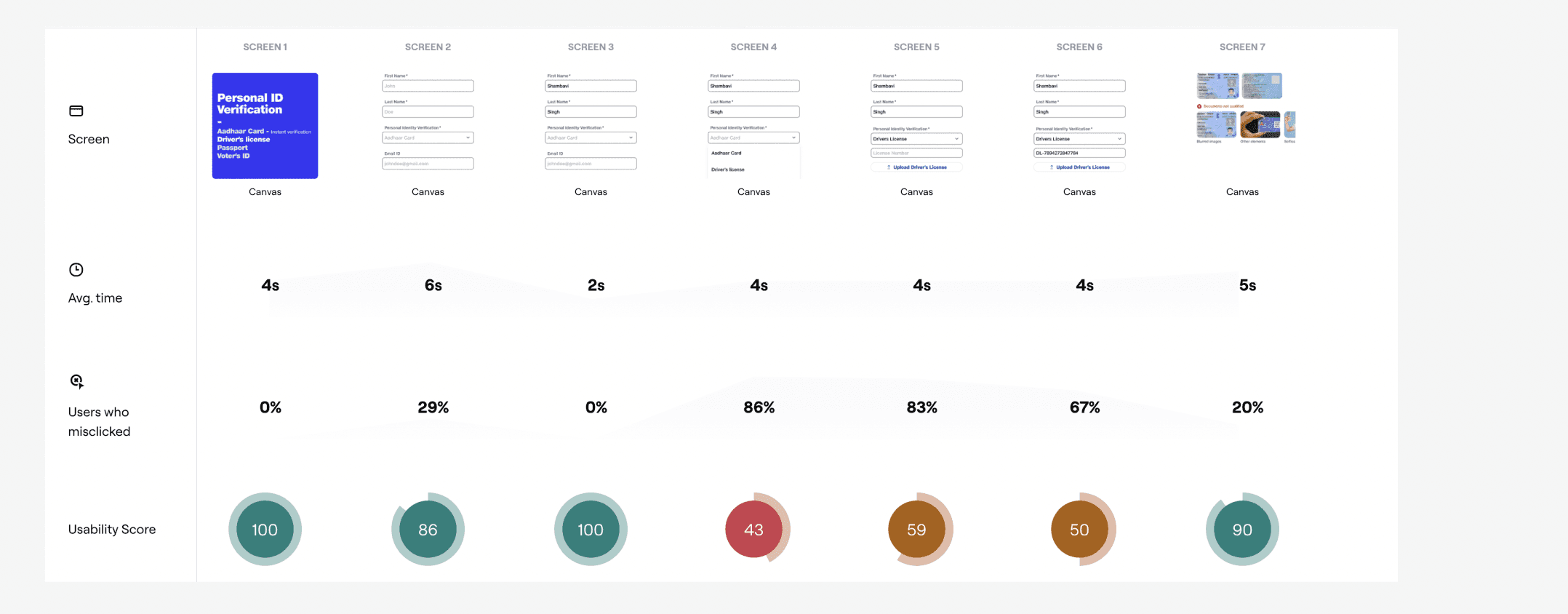
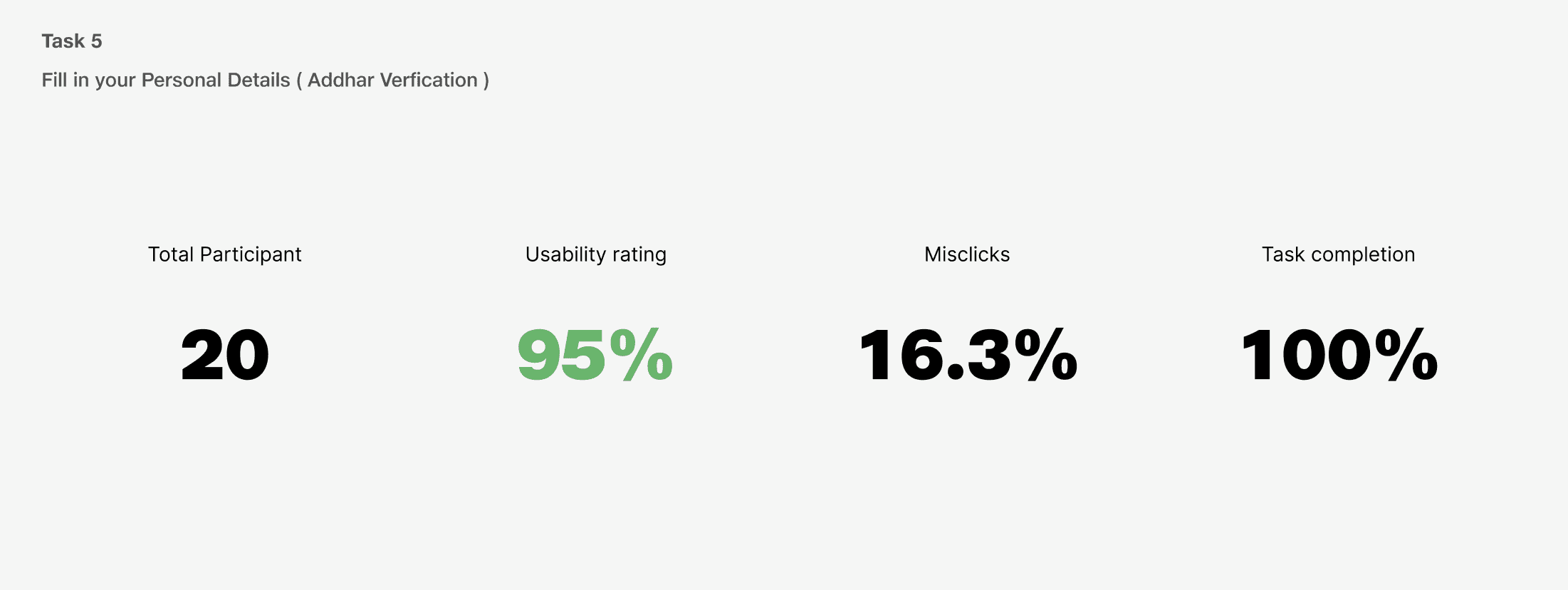
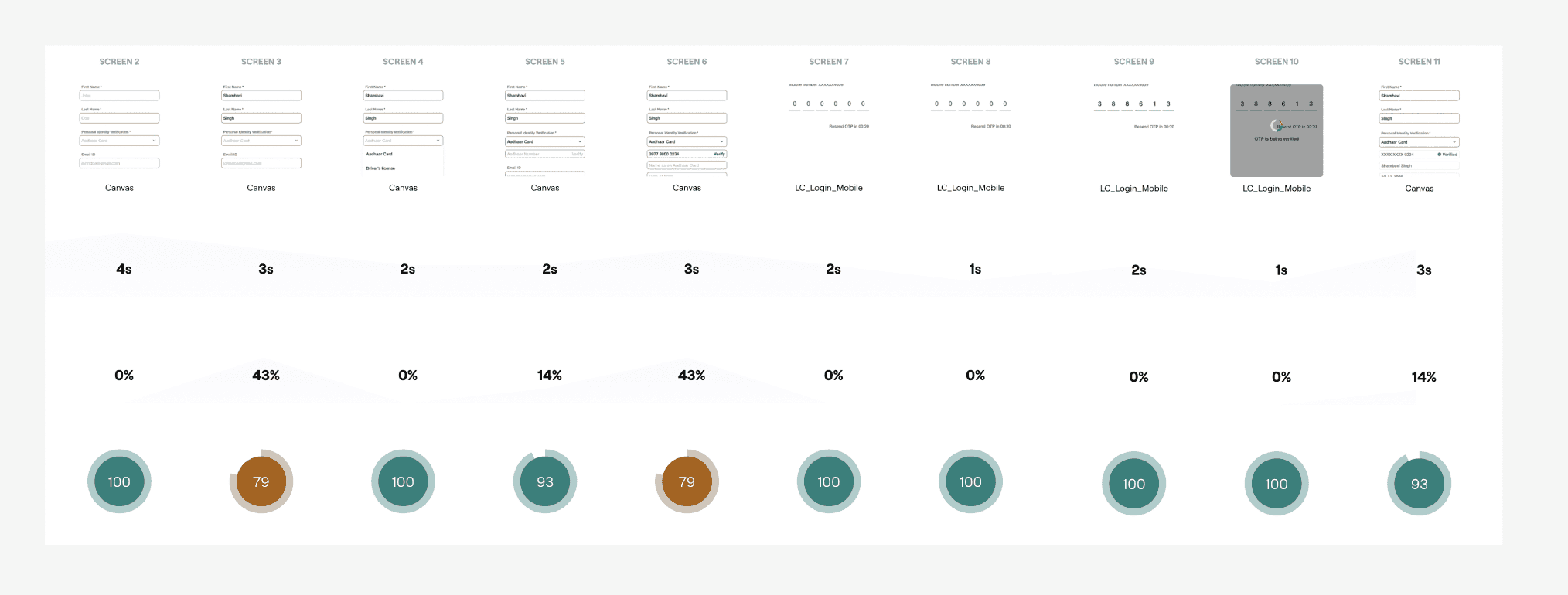
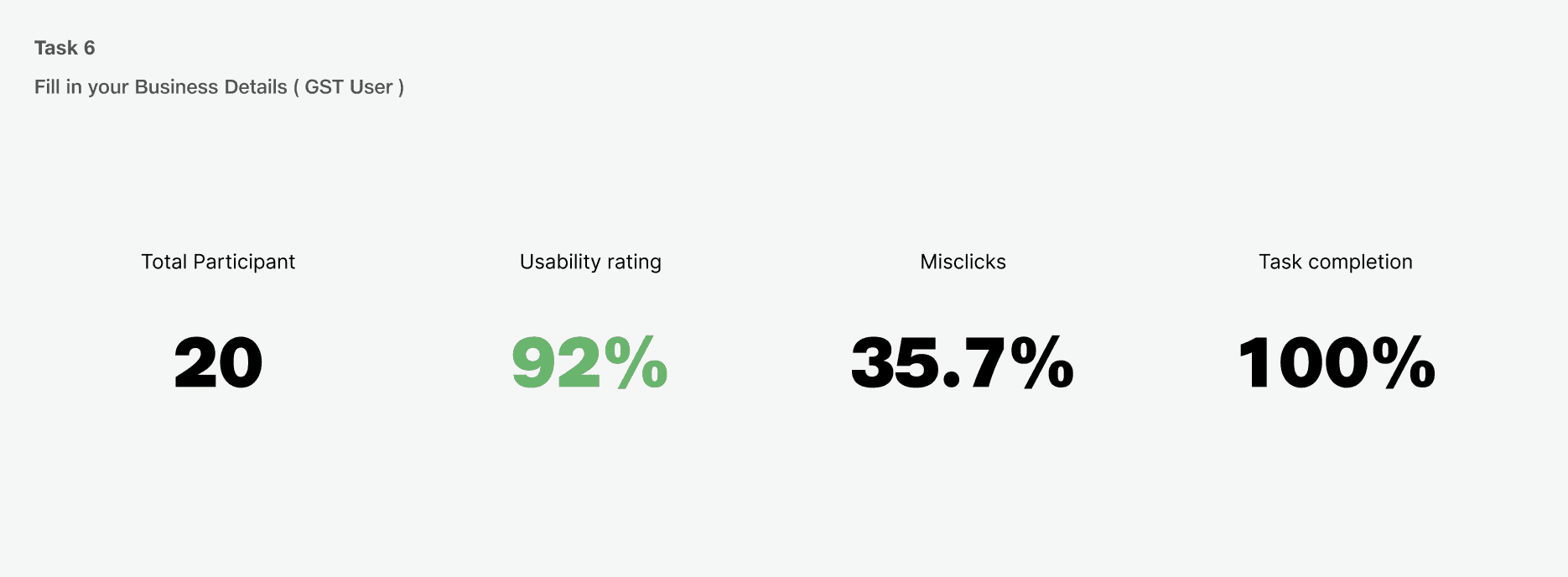
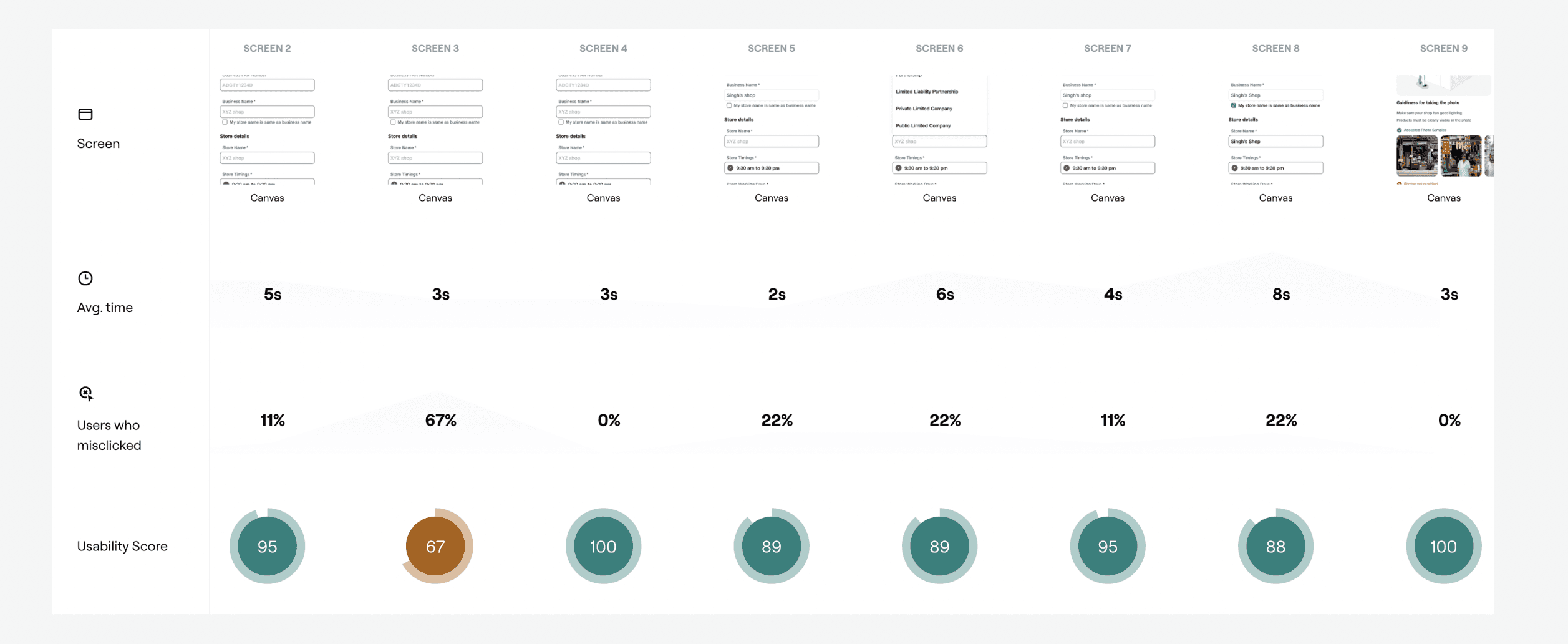
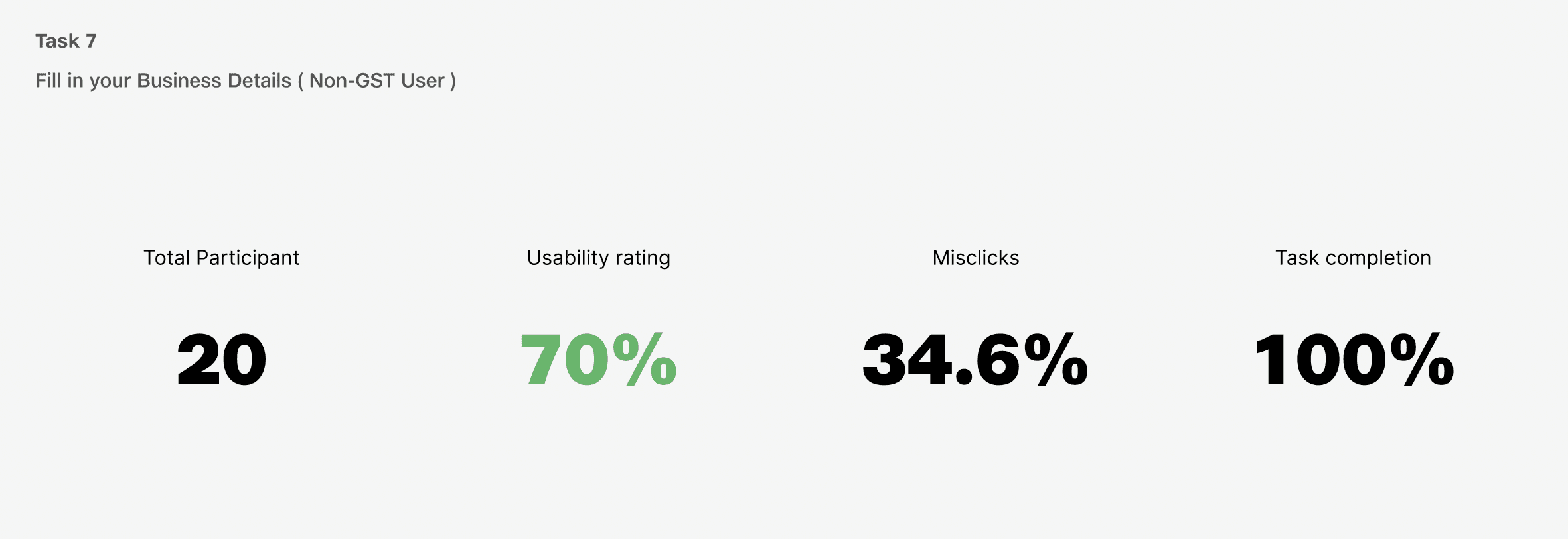
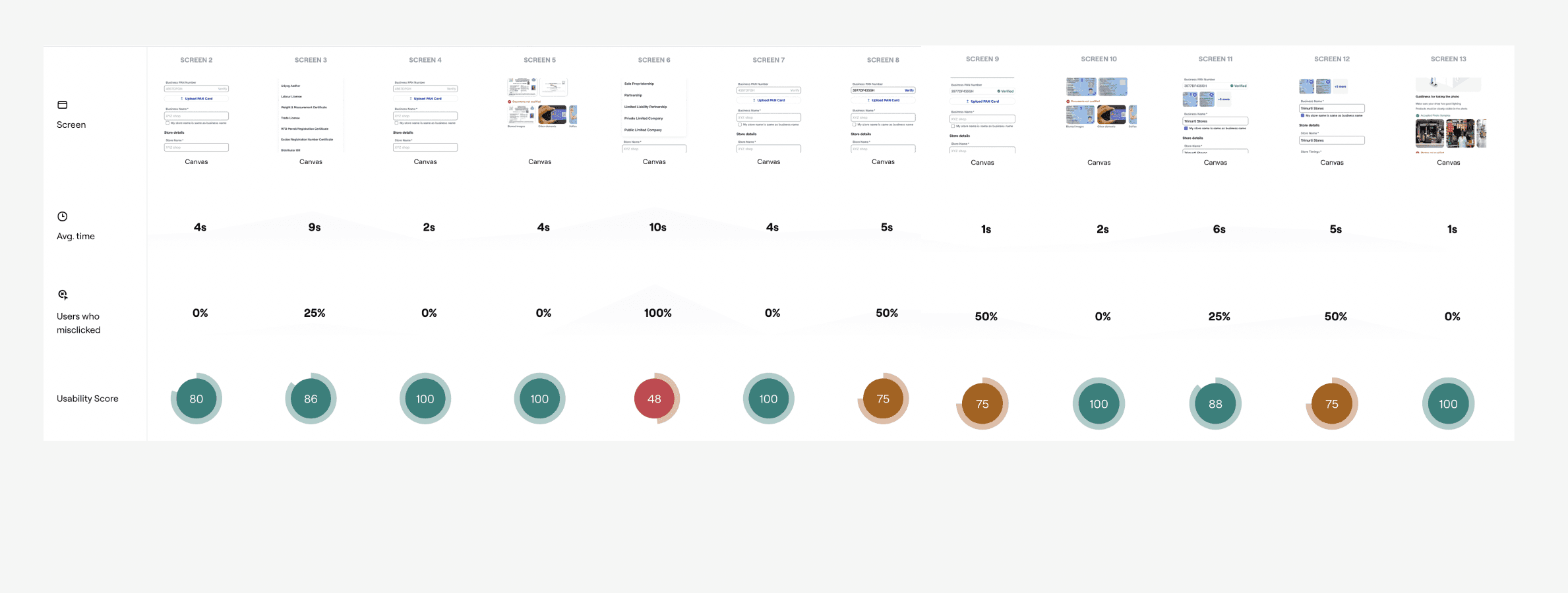
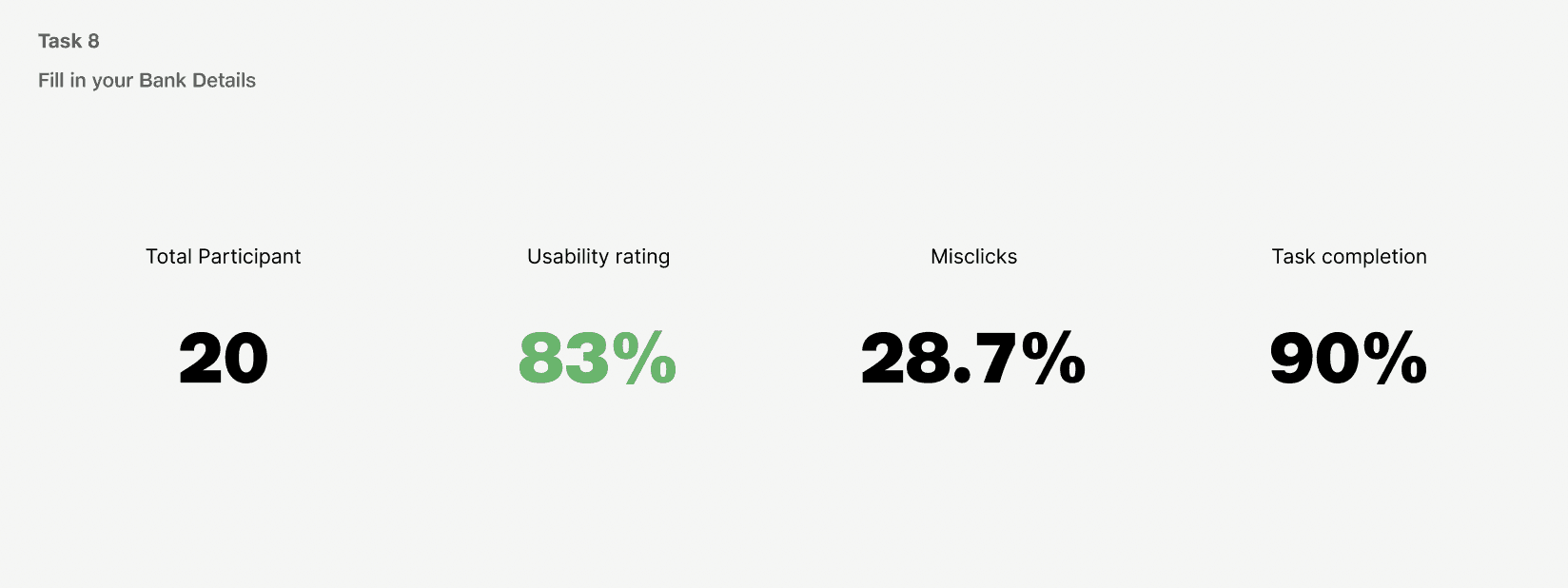
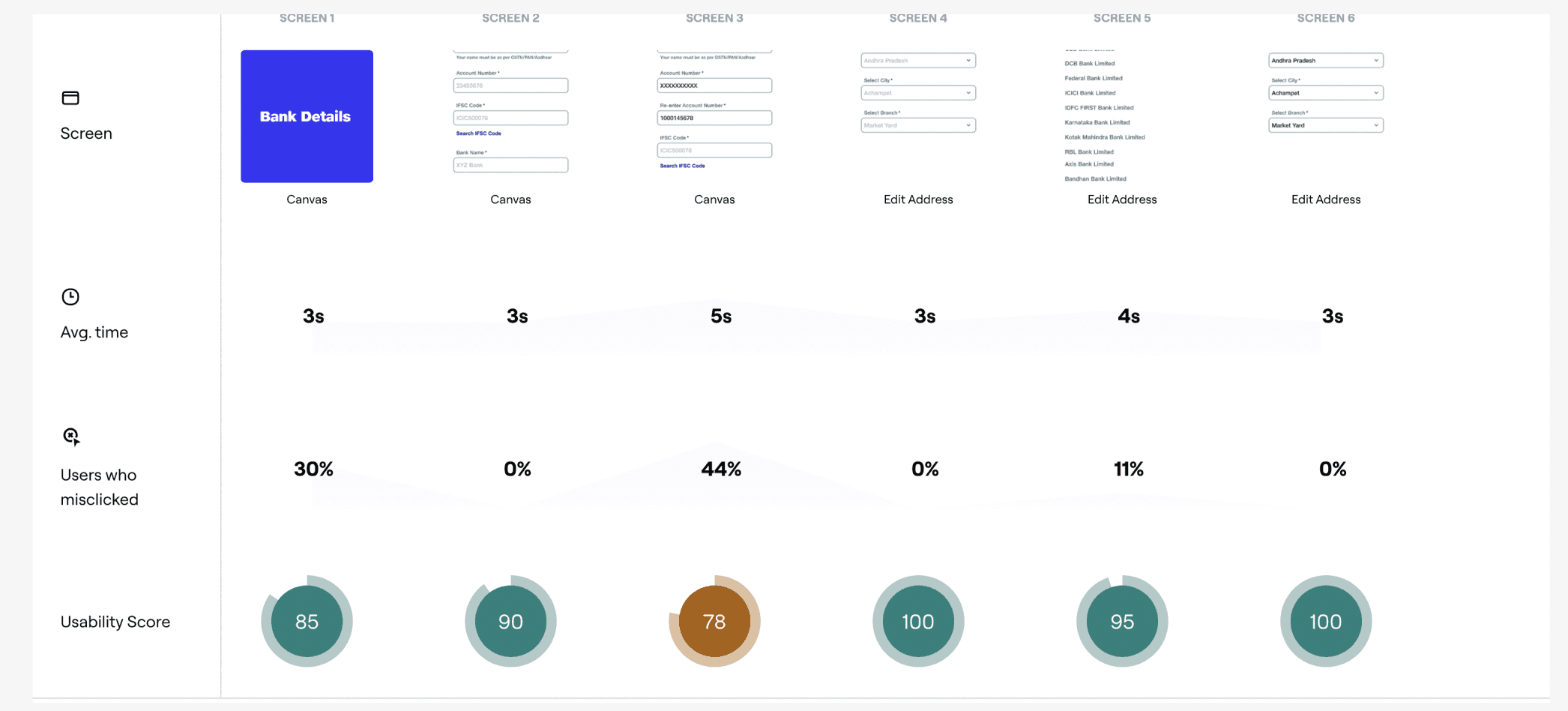
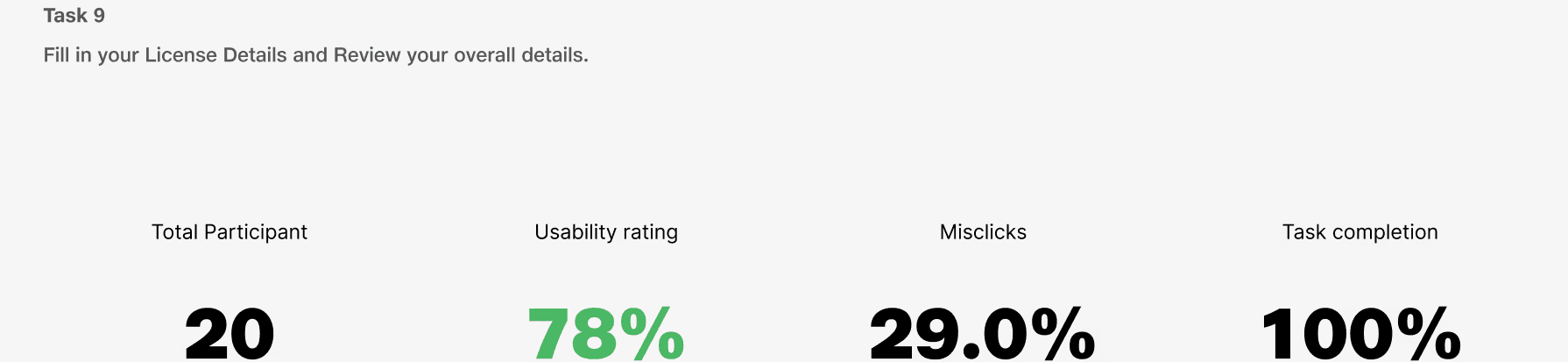
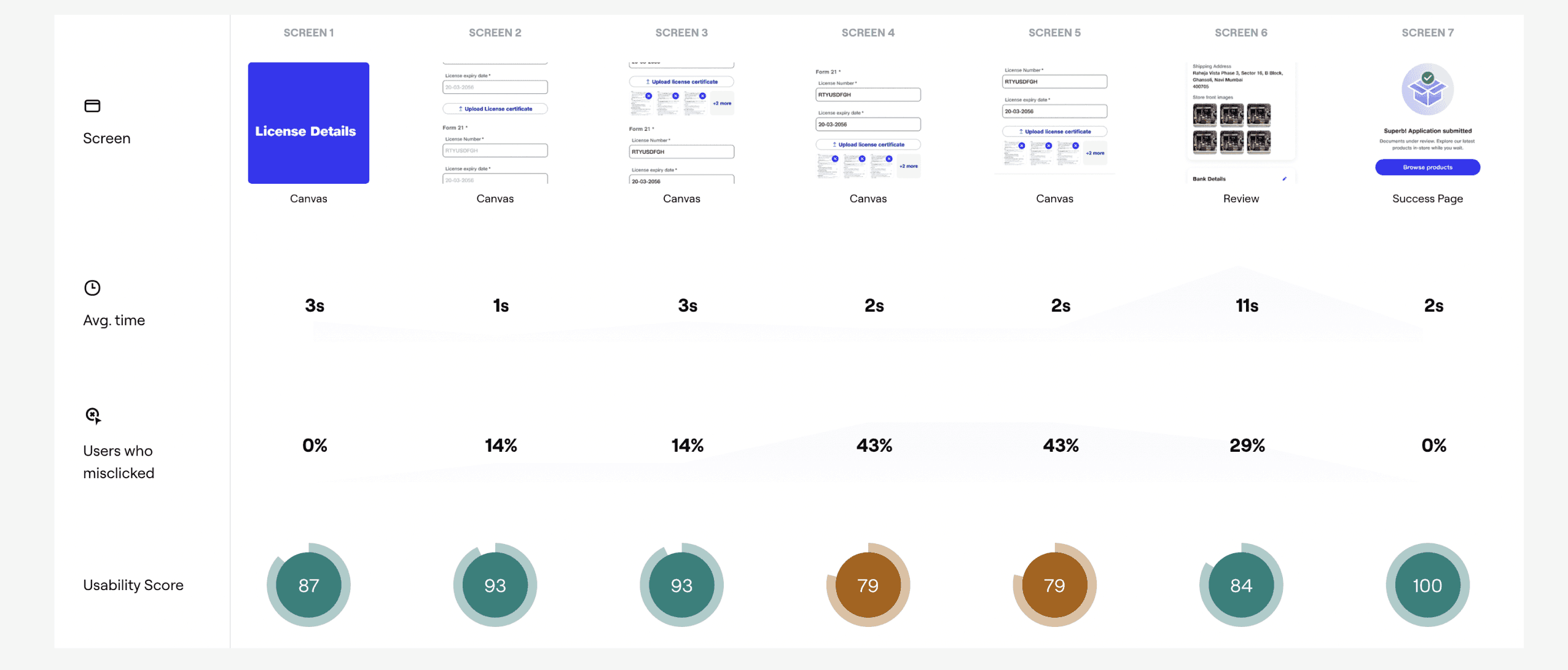
To validate the redesigned onboarding experience, we conducted a Maze usability test with 20 participants, dividing the complete onboarding journey into eight focused task flows. Each task measured usability rating, misclicks, and task completion, capturing real-world user behavior to assess the effectiveness and intuitiveness of the new design.
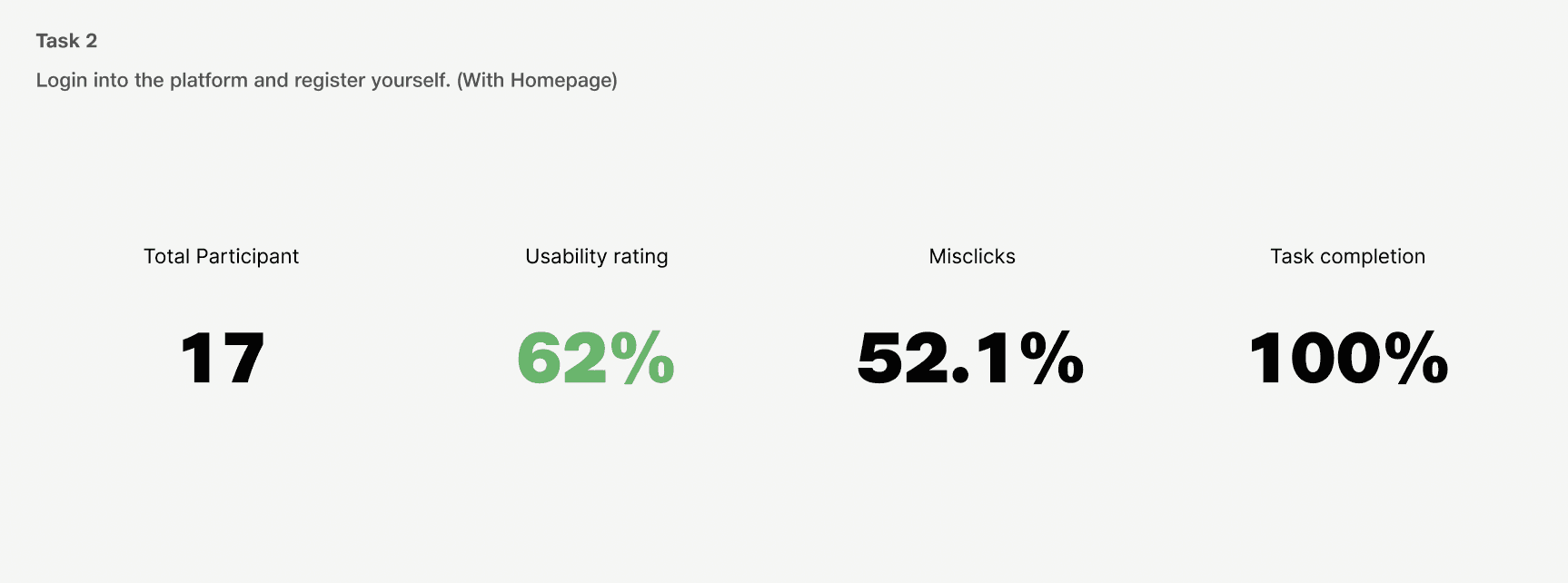
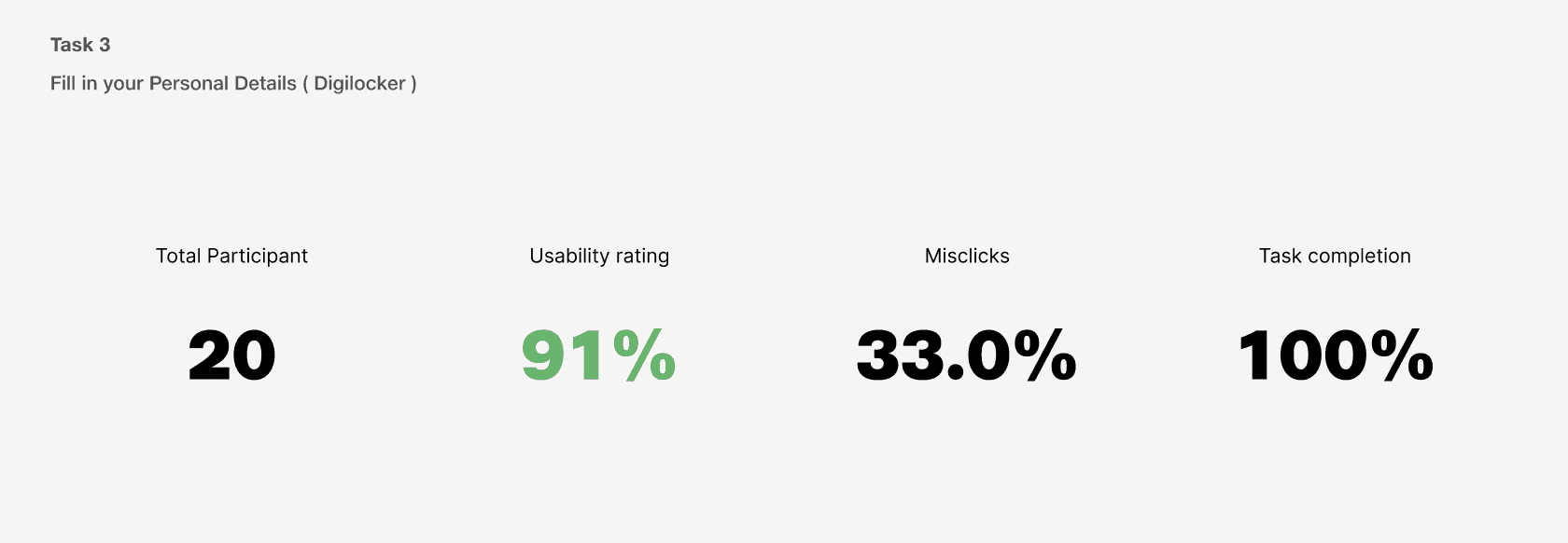
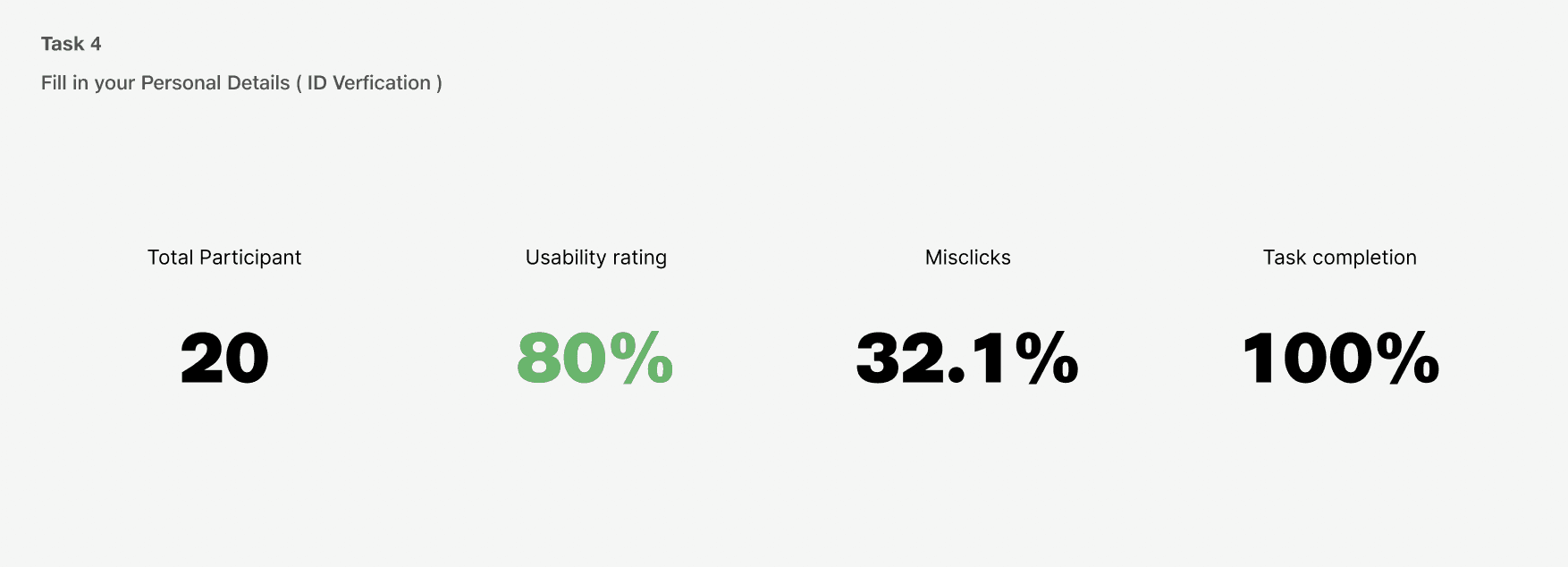
Average Usability Rating
Indicates strong ease of use and intuitiveness across key onboarding flows.
Average Misclick Rate
Represents moderate navigation friction, primarily observed in detailed form screens.
Average Task Completion Rate
Shows high task success and strong learnability despite interaction challenges.
Summary
All 8 onboarding tasks were tested with participants on mobile devices, representing both assisted and self-onboarding journeys.
An average usability score of 81% indicates that the redesigned onboarding flow is intuitive and accessible on mobile.
Despite a moderate misclick rate (32%), users were still able to successfully complete nearly all tasks (98.7%), showcasing strong learnability and task recovery.
The highest improvements were observed in Aadhaar and Digilocker flows, achieving over 90% usability with zero drop-offs.
Tasks with higher cognitive load — such as Business and Bank Details — showed lower usability and higher error frequency, indicating opportunities for form simplification and clearer guidance.
Key learnings
Practiced strong stakeholder management through regular design walkthroughs, cross-team alignment, and transparent communication via Slack and email.
Strengthened empathy — not only for users but also for cross-functional collaborators, balancing multiple perspectives in every design decision.
Bridged design, business, and tech, aligning design choices with business goals and understanding the existing tech stack for seamless implementation.
Created scalable design patterns adopted across multiple Jio products, addressing varied tenant needs through a unified framework.
Designed with future growth in mind, ensuring scalability, consistency, and long-term adaptability of the onboarding system.